
Information Sierra
 ATIS Training Series – Learn Step by Step
This article is part of our ATIS Training Series. In each post, you will:
- listen to a real ATIS message,
- read the full transcription,
- decode the information (weather, runway, approach, warnings),
- and practice with an exam-style question.
💡 On the ICAO English exam, one of the tasks is to listen to an ATIS recording and choose the correct answer from 3 options.
👉 Remember: you can always ask the examiner to play the ATIS one more time. This is allowed and will not affect your score.
🎧 Watch & Listen on YouTube
We prepared a short video with this exact ATIS message from CYYT (St. John’s International Airport).
👉 Watch the ATIS on YouTube:
https://www.youtube.com/shorts/MgKX9Y42_Z8
OR
🔊 Play the video on our website, listen carefully, and repeat the message out loud – just like in the real exam.
 What is ATIS?
ATIS means Automatic Terminal Information Service.
It is a recording at airports. It tells pilots about:
– the weather,
– the runway in use,
– special information.
Pilots must listen to ATIS before they call the tower. This makes communication faster and safer.
 ATIS Example – CYYT (St. John’s International Airport)
This is a real ATIS message. It was recorded at 17:00 UTC at St. John’s.
ATIS Transcription:
This is St. John’s ATIS Information Juliet, weather at time 17:00 Zulu.
Wind 310 degrees at 20 knots, gusting 26.
Visibility 15 miles.
Ceiling 2,700 feet broken.
Temperature minus 3.
Dew point minus 19.
Altimeter 29.72.Approach RNAV Zulu runway 28.
Inform Gander Centre on frequency 133.15 of requested approach on initial contact.Landing and departing runway 28.
Runway surface condition for runway 28: condition code 6 / 6 / 6.
Surface dry / dry / dry.
Chemical residue present.
Advise ATC you have Information Juliet.
✈️ Decode the ATIS
Time: 3rd at 17:00 UTC
Wind: 310° at 20 knots, gusting to 26 knots
Visibility: 15 miles
Clouds: Broken ceiling at 2,700 ft
Weather: No precipitation reported; conditions generally VFR
Temperature: –3°C
Dew point: –19°C
Altimeter: 29.72 inHg
Approach in use: RNAV Zulu Runway 28
Runway:
- Active runway: 28
- Runway condition code: 6 / 6 / 6
- Surface: Dry / dry / dry
- Notes: Chemical residue present
- Validity: March 3rd 16:04Z → March 4th 00:04Z
Additional instruction:
Inform Gander Centre on 133.15 of requested approach on initial contact.
✈️ Why is this important?
This ATIS is interesting because:
- Strong, gusty winds can create challenging takeoff and landing conditions.
A steady wind of 310° at 20 knots is already notable, but gusts up to 26 knots can quickly destabilize an aircraft—especially during approach or in the flare. Gusty crosswinds demand rapid control corrections, increase pilot workload, and can lead to ballooning, hard landings, or the need for a go-around. Even moderate gusts require careful technique and higher approach speeds for safety. - A broken ceiling at 2,700 ft affects approach planning and minimums.
While this ceiling still allows VFR operations, it reduces vertical maneuvering space and may limit the type of approaches available. For IFR arrivals, a broken layer at 2,700 ft means pilots must be prepared to transition from instruments to visual references later in the approach. Lower ceilings also affect circling procedures and may require stricter compliance with published minima. - Cold temperatures and a dry runway combination reduce icing risk but require proper performance calculations.
With a temperature of –3°C and a dew point of –19°C, the air is extremely dry. This eliminates the risk of airframe icing near the ground—but it also means density altitude is low, improving aircraft performance. Pilots should incorporate this into takeoff and landing distance calculations. Despite the dry runway surface, the presence of chemical residue suggests recent treatment, which is operationally relevant.
✈️ Practice Question (Exam Style)
You listen to the ATIS.
The question is:
What is the reported ceiling?
A) 1,000 feet overcast
B) 2,700 feet broken
C) 4,500 feet few clouds
✅ Correct answer: B) 2,700 feet broken
✍ Exam Tip
During the ICAO English exam, you will listen to an ATIS message and answer a question
with 3 choices.
👉 Remember: you can always ask the examiner:
“Could you please play the recording again?”
This is allowed and does not lower your score.
📱 Bonus for Smart Students
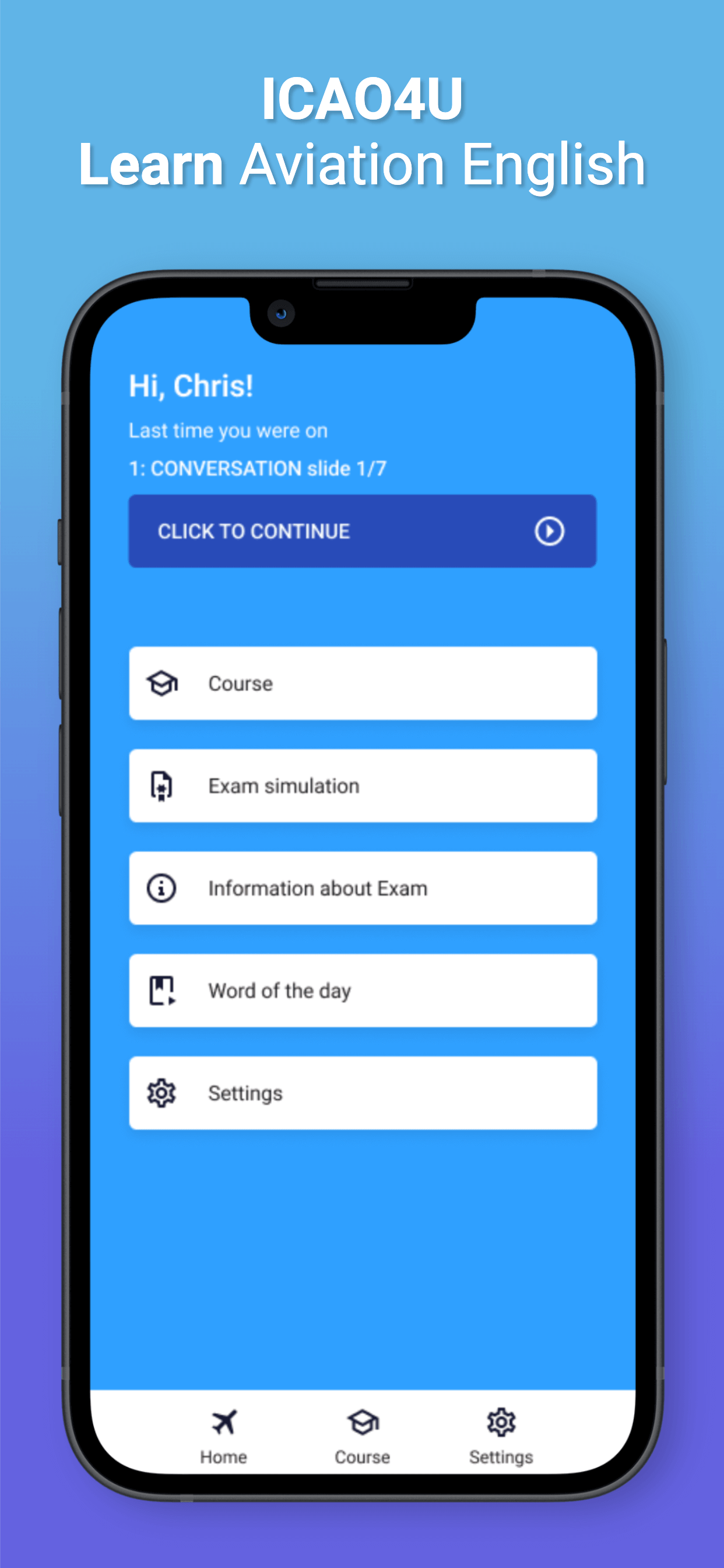
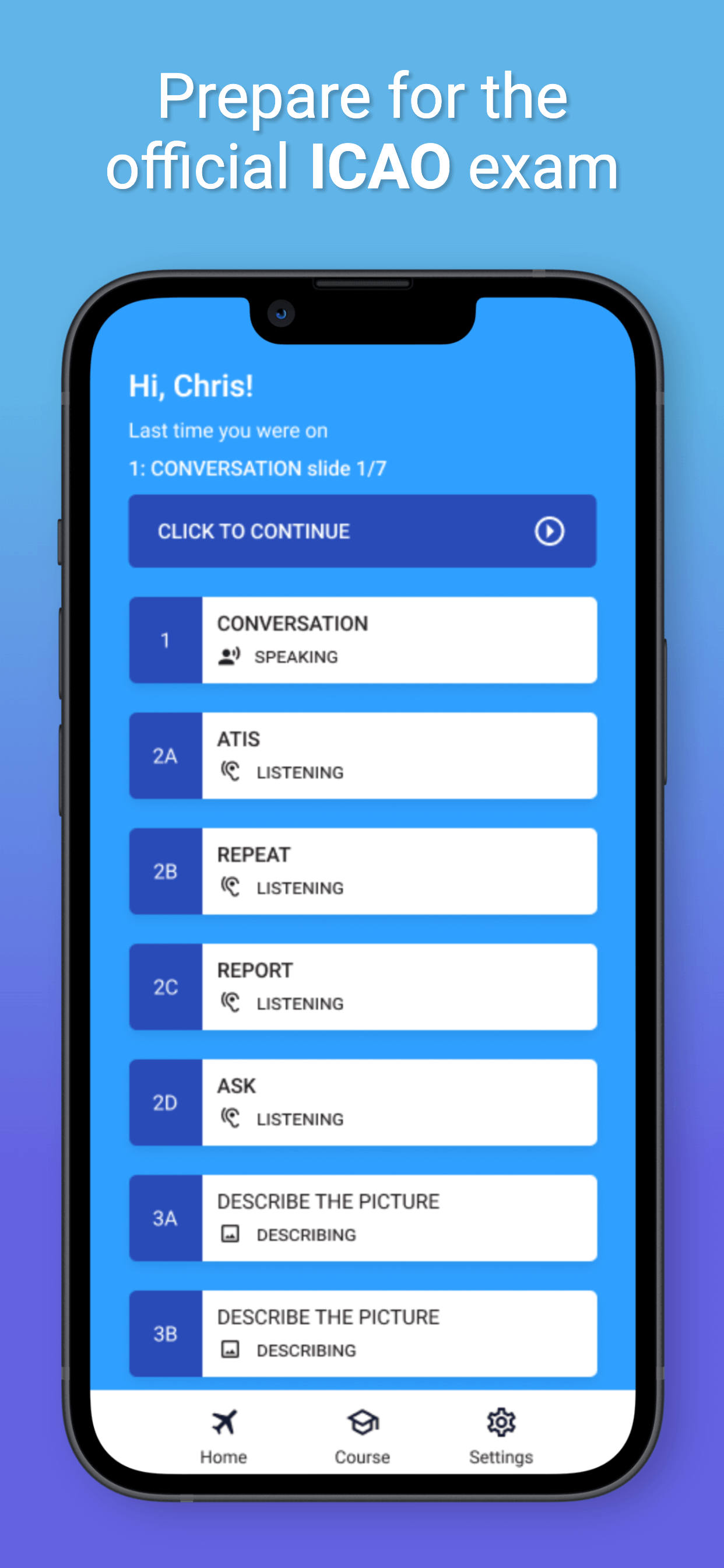
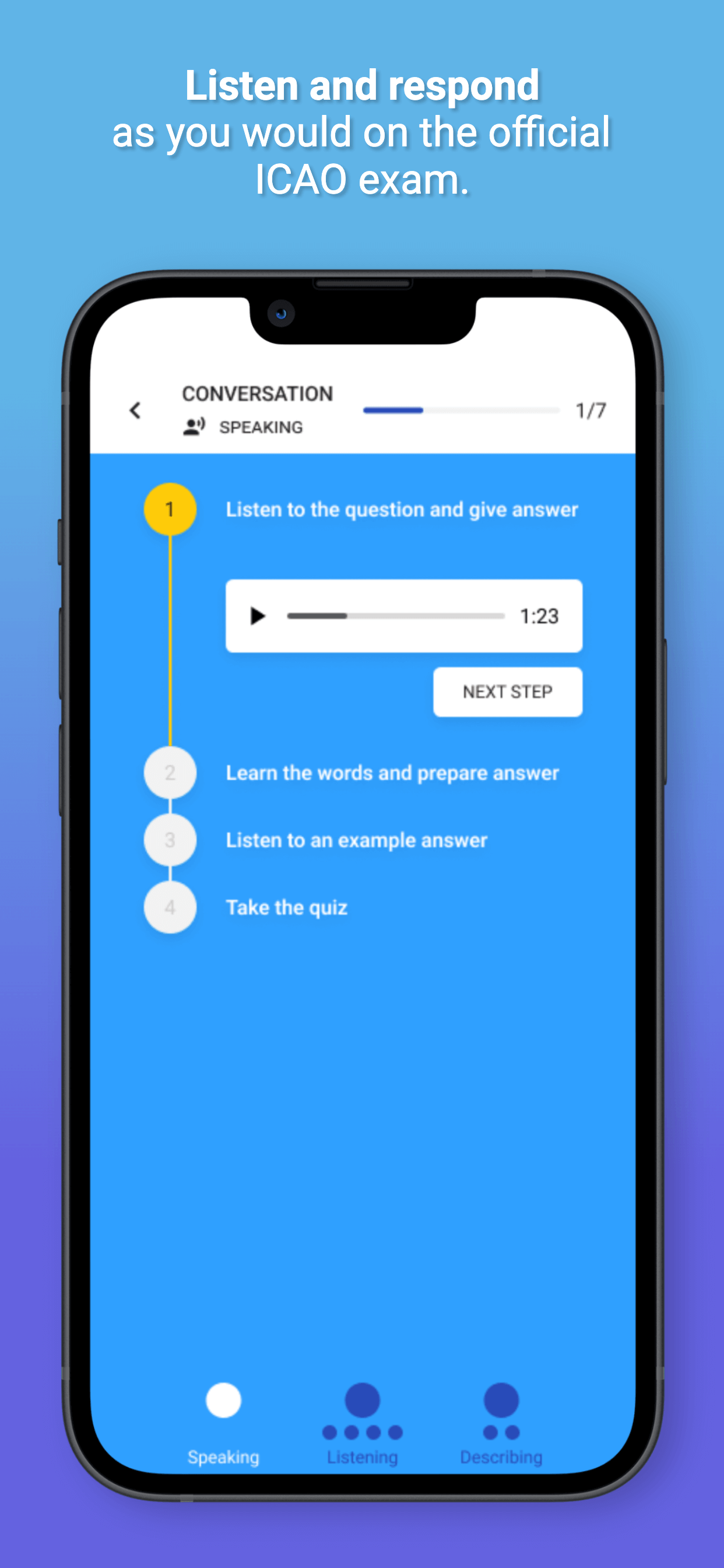
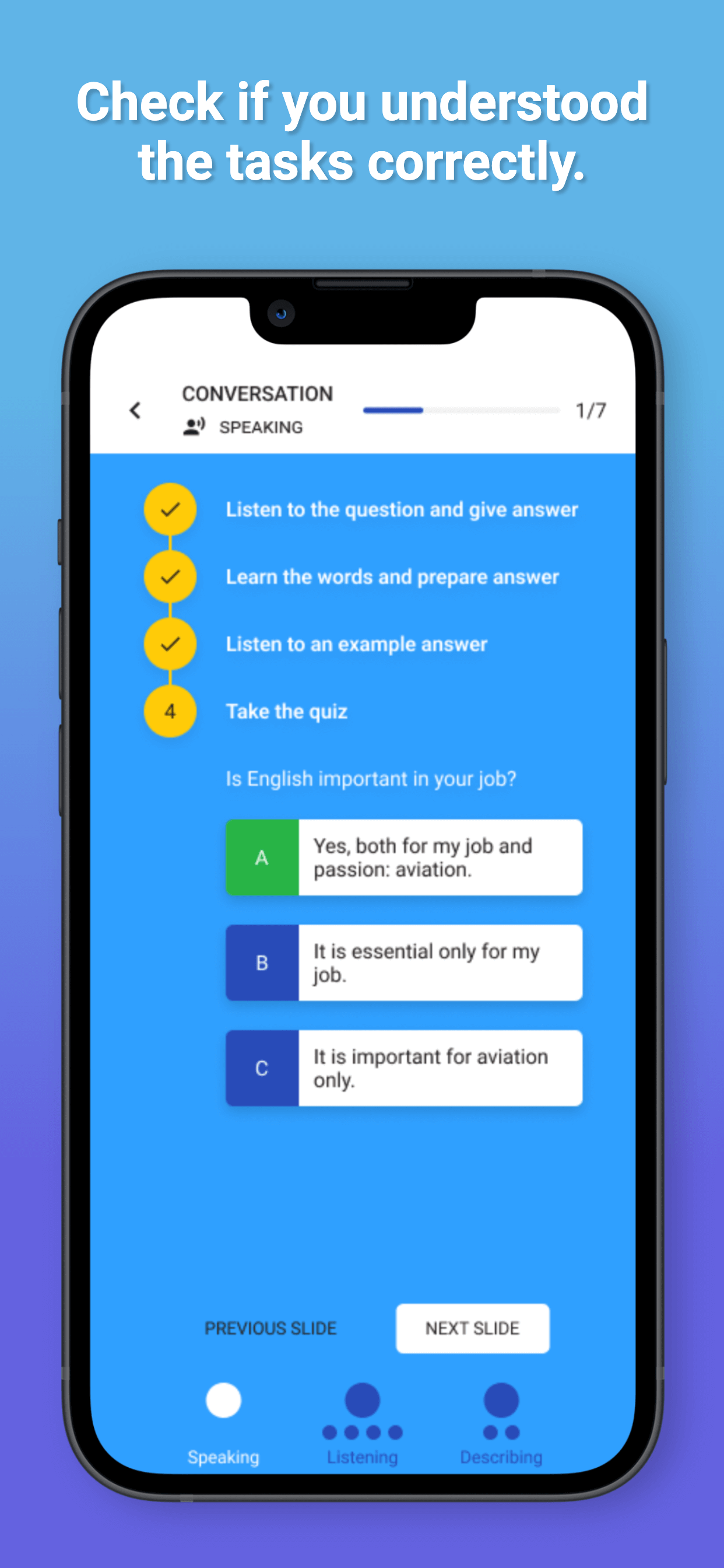
If you want more practice, try the ICAO4U mobile app.
It includes many recordings just like the ones you will hear on the exam – ATIS, clearances,
and real pilot–ATC communication.
😏 Think of it as a legal cheat sheet for your exam – everything you need to feel confident,
but 100% allowed!
Download our APP